Nappa (also spelled napa) is soft, smooth, supple leather, usually full grain and chrome tanned. It isn't an animal or a grade: nappa can be calf, cow, lamb or goat. It's named after Napa, California, where tanner Emanuel Manasse developed the process at the Sawyer Tanning Company in 1875.
What "nappa" means on a label
"Nappa" describes a feel and a finish: smooth, soft and supple, with a natural fine grain. There's no standard that defines it, so quality varies. Good nappa is full grain. Lower-grade products sometimes use the word for corrected-grain leather, and "nappa" or "nappa-look" also appears on synthetic upholstery.
On a glove spec sheet, look for the full description. The DM3000C's reads "full grain napa cowhide, 0.6–0.8 mm, drum dyed, matte finish, chrome tanned". That tells you the animal, the grade, the thickness and how it was made.
Full grain, top grain, corrected and split
| Grade | What it is | In a glove |
|---|---|---|
| Full grain | The outer layer kept whole, surface not sanded. Natural pores and marks show. | Strongest and most abrasion resistant; breathes; ages well |
| Top grain | Outer layer with the surface lightly sanded and refinished. | More uniform look; a little less durable and breathable |
| Corrected grain | Sanded harder, then embossed with an artificial grain and coated. | Even appearance; stiffer; less breathable |
| Split | A lower layer split off a thick hide; becomes suede or is coated. | Fine as suede; coated splits are often sold as "genuine leather" |
Chrome tanning and drum dyeing
Chrome tanning uses chromium salts to stabilise the hide. It produces the soft, supple, fairly water-tolerant leather that nappa is known for, and it's the most common tanning method for glove leather. Vegetable tanning, using plant tannins, gives a firmer leather that's more common in belts and holsters.
Drum dyeing tumbles hides in dye so the colour penetrates through the leather rather than sitting on top. A scuff on a drum-dyed black glove stays black.
A responsible spec also states what's left out. The DM3000C's leather is specified free of PCP (pentachlorophenol, a preservative) and AZO dyes, some of which can release harmful amines.
Leather thickness
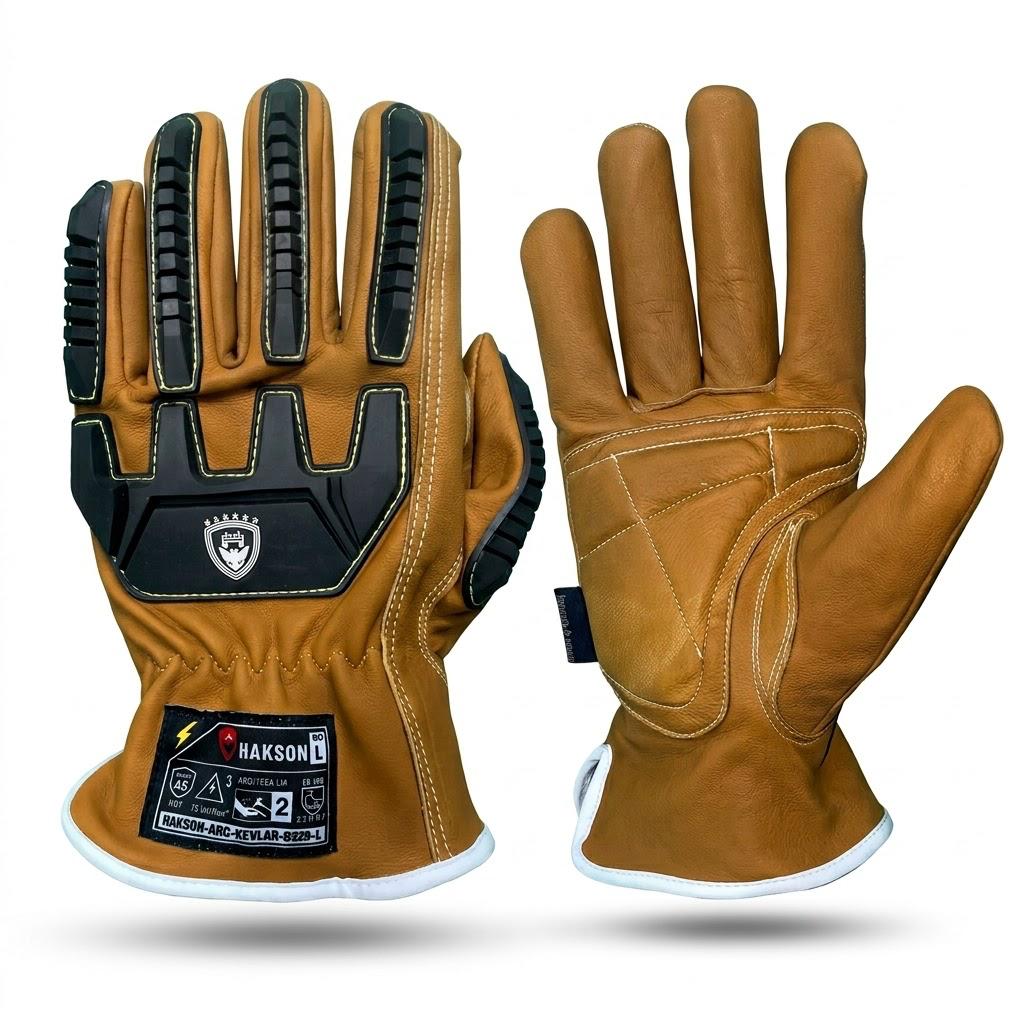
Glove leather is measured in millimetres, or in ounces in North American leather trade (1 oz = 1/64 inch, about 0.4 mm). Thinner leather gives more feel; thicker leather gives more protection. Our spec sheets list it: 0.6–0.8 mm napa cowhide on the DM3000C, 0.8–0.9 mm goatskin on the ARC-KEVLAR 8329.
For the trade-offs between hides, see cowhide vs goatskin.
How to spot good nappa
- Natural, fine grain that varies slightly across the glove. A perfectly uniform surface suggests corrected grain.
- Soft drape without feeling plasticky. It should crease softly when you bend a finger.
- A full description on the label or spec sheet: animal, grade, thickness.
- Real leather all the way through. Check the edge and back as in our genuine vs faux leather guide.
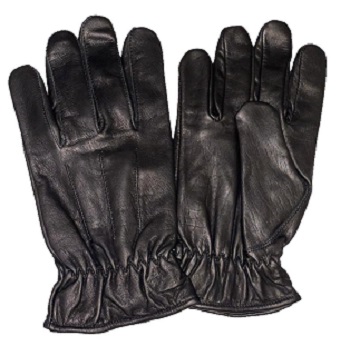
D.M.3000C
Full grain napa cowhide, 0.6–0.8 mm · EN 388 4443DX
Drum-dyed, matte, chrome-tanned full grain napa cowhide with a water- and oil-repellent finish, over a 650 denier Spectra® liner.
FAQ
What is nappa leather?+
Is nappa leather real leather?+
Is nappa better than full grain?+
Where does the name nappa come from?+
Napa or nappa: which spelling is right?+
Spectra® is a registered trademark of its owner. DuPont™ and Kevlar® are trademarks or registered trademarks of DuPont de Nemours, Inc.