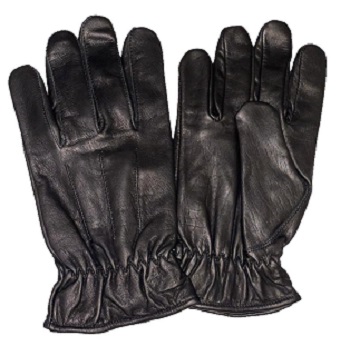
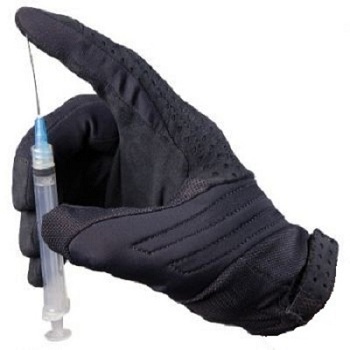
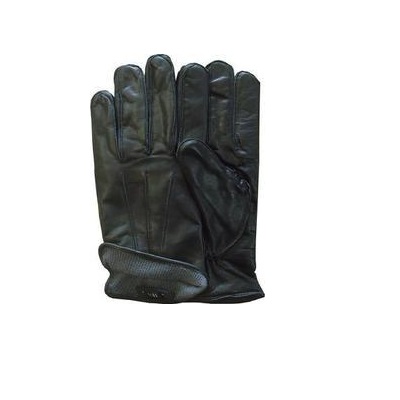
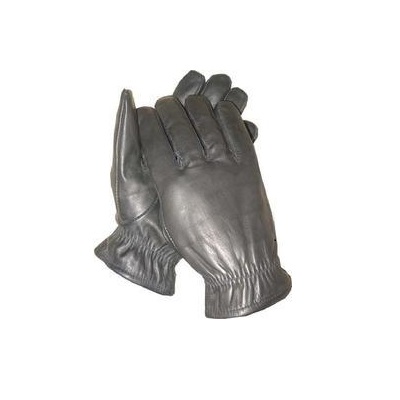
Cowhide is thicker and tougher, and is the standard for hard-wearing work and duty gloves. Goatskin is thinner and more supple for its strength, so it gives better feel and dexterity. Both make excellent gloves; the choice depends on whether the job needs durability or fine finger control.
Cowhide vs goatskin vs sheepskin
| Cowhide | Goatskin | Sheepskin | |
|---|---|---|---|
| Grain | Larger pores, more visible texture | Tight, fine, often slightly pebbled | Very fine and smooth |
| Feel | Firm; breaks in over time | Supple from new | Softest |
| Strength for its thickness | Good | High | Lower |
| Abrasion resistance | High, especially in thicker hides | Good | Modest |
| Dexterity | Good when split thin (napa) | Very good | Excellent |
| Typical uses | Duty, search, motorcycle and work gloves | Tactical, driving, flame-resistant and arc-rated gloves | Dress, uniform and lined winter gloves |
| In the Hakson range | 14 gloves | 9 gloves | 5 gloves |
Counts are gloves whose catalogue entry lists that leather as a material.
Cowhide
Cowhide is the most widely used glove leather. Cattle hides are large and thick, so they can be split to the thickness a glove needs, from heavy work gauntlets to fine duty gloves. Full grain cowhide takes abrasion and tearing well, and it softens and shapes to the hand with wear.
Thin doesn't mean weak: the DM3000C uses full grain napa cowhide at just 0.6–0.8 mm and still scores the top level, 4, for both abrasion and tear in EN 388.
Goatskin
Goatskin is strong for its weight. Its tight fibre structure gives it high tensile strength at a modest thickness, so a goatskin glove can be thinner and more flexible than a cowhide glove of similar toughness. That's why it's popular for gloves where you need to feel what you're doing: tactical work, driving, handling tools and fasteners.
The ARC-KEVLAR 8329 uses a 0.8–0.9 mm goatskin shell, treated to repel water and oil and to resist flame, over a DuPont™ Kevlar® lining.
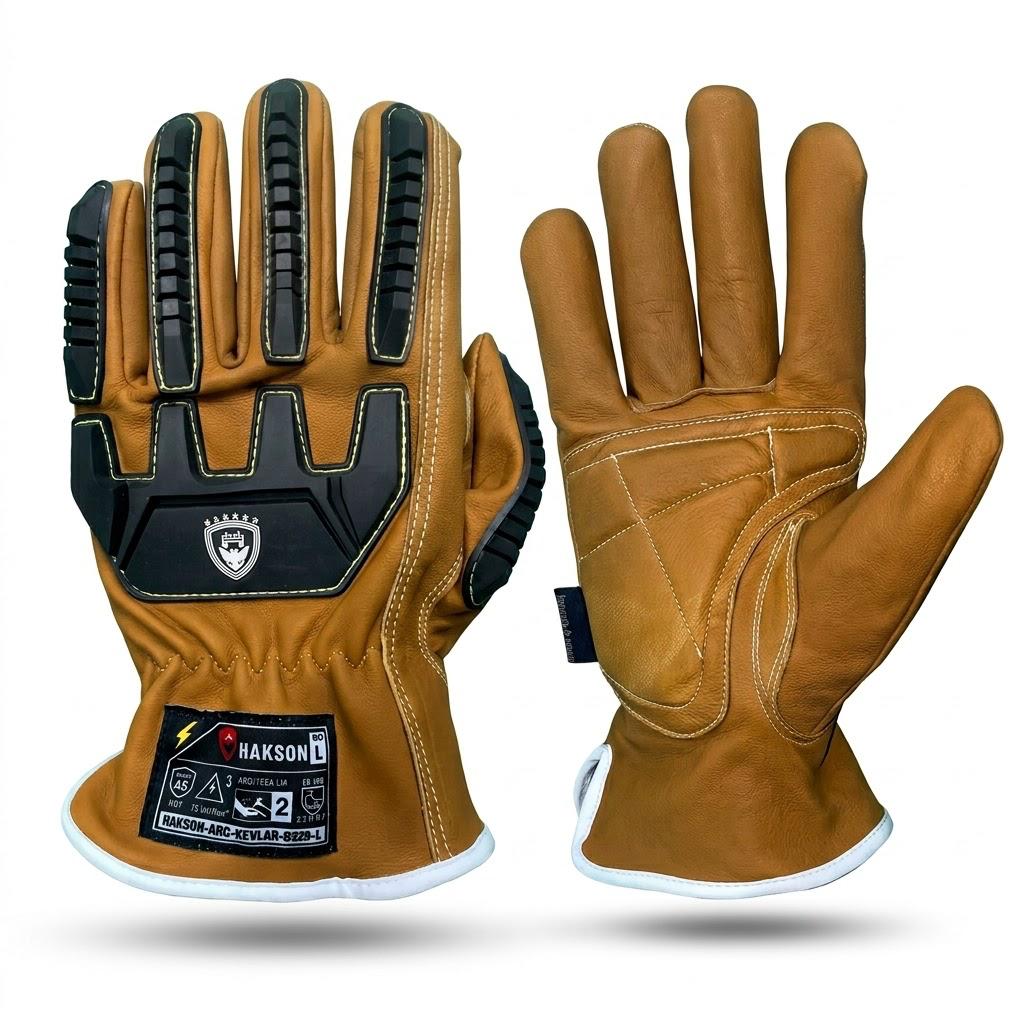
HAKSON-ARC-KEVLAR-8329
Goatskin shell, 0.8–0.9 mm · EN 388 3X33DP · 35 cal/cm²
A treated goatskin shell for flame, arc flash and wet or oily work, with a Kevlar® lining for cut resistance and rubber impact armour on the back.
Sheepskin
Sheepskin is the softest of the three and gives the best fit and finger feel, which is why it's used for dress and uniform gloves. It's less resistant to abrasion, so it isn't the right shell for rough work. The Unlined Dress Glove is sheepskin.
How to tell them apart
- Grain: cowhide has larger, more widely spaced pores. Goatskin's grain is tighter and finer, often with a slight pebble. Sheepskin is smoothest.
- Weight and drape: at the same thickness, goatskin feels lighter and more flexible than cowhide.
- The label: the most reliable check. A good glove names the leather and its grade, not just "leather".
Making sure it's leather at all comes first: see how to tell genuine from faux leather.
Which to choose
| If the job needs… | Choose | Example |
|---|---|---|
| Abrasion and tear resistance, under a cut liner | Full grain cowhide | DM3000C |
| Dexterity with flame or arc protection | Treated goatskin | ARC-KEVLAR 8329 |
| A long gauntlet for motor patrol | Cowhide | Lined Motorcycle Gauntlet |
| Fit and finish for dress uniform | Sheepskin | Unlined Dress Glove |