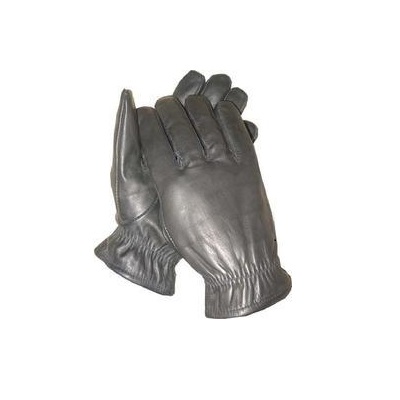
Turn over almost any work or duty glove and you'll find a shield with a hand-and-hammer icon and a short code under it — something like 4443DX. That's the EN 388 rating. It packs six separate lab results into six characters, and once you know the order it takes about ten seconds to read. This guide walks through each position, using the DM3000C's 4443DX as the worked example.
What EN 388 is
EN 388 is the European standard for protective gloves against mechanical risks: wear, cuts, tears and punctures. The current edition is EN 388:2016+A1:2018. Although it's European, it's the rating you'll see on most protective gloves sold in Canada, usually next to the North American ANSI/ISEA 105 cut level.
Each result comes from a defined lab test on the palm material, so two gloves with the same code performed the same way under the same conditions. That's what makes the code useful for comparing gloves from different makers. It's not a guarantee against every blade or point in the field.
Reading the six characters
The order never changes. Left to right:
| # | Property | Test | Scale |
|---|---|---|---|
| 1 | Abrasion resistance | Sandpaper rubbed on the material until it holes | 0 – 4 |
| 2 | Blade cut (coup) | Circular blade run back and forth under a fixed load | 0 – 5 |
| 3 | Tear resistance | Force needed to tear the material | 0 – 4 |
| 4 | Puncture resistance | Force needed to push a steel stylus through | 0 – 4 |
| 5 | Cut resistance, ISO 13997 (TDM) | Straight blade drawn across under increasing load | A – F |
| 6 | Impact protection (EN 13594) | Impact on the knuckle area | P, or absent / X |
X in any position means the glove wasn't tested for that property, or the test doesn't apply. A 0 means it was tested and fell below level 1. Those are different statements: an X tells you nothing either way.
The thresholds behind each level
| Level | Abrasion (cycles) | Coup cut (index) | Tear (N) | Puncture (N) |
|---|---|---|---|---|
| 1 | 100 | 1.2 | 10 | 20 |
| 2 | 500 | 2.5 | 25 | 60 |
| 3 | 2,000 | 5.0 | 50 | 100 |
| 4 | 8,000 | 10.0 | 75 | 150 |
| 5 | — | 20.0 | — | — |
| ISO 13997 letter | Minimum cutting force |
|---|---|
| A | 2 N |
| B | 5 N |
| C | 10 N |
| D | 15 N |
| E | 22 N |
| F | 30 N |
Worked example: DM3000C, 4443DX
| Position | Result | What it means |
|---|---|---|
| Abrasion | 4 | The palm material lasted at least 8,000 abrasion cycles: the top level. |
| Coup cut | 4 | A coup cut index of at least 10.0, one step below the maximum. |
| Tear | 4 | At least 75 N to tear: the top level. |
| Puncture | 3 | At least 100 N to push the stylus through (level 4 starts at 150 N). |
| ISO cut | D | At least 15 N of cutting force on the TDM test (E starts at 22 N). |
| Impact | X | Not tested. The DM3000C is a slash glove with no knuckle armour. |
The split is easy to see in how the glove is built. Abrasion and tear come mostly from the shell, full grain napa cowhide at 0.6–0.8 mm. Cut resistance comes from the liner, a seamless knit of 100% Honeywell Spectra® at 650 denier, sewn and tacked at all five fingertips so it can't pull out or bunch when the glove comes off. (What Spectra and "650 denier" actually mean is covered in our cut-resistant materials guide.)
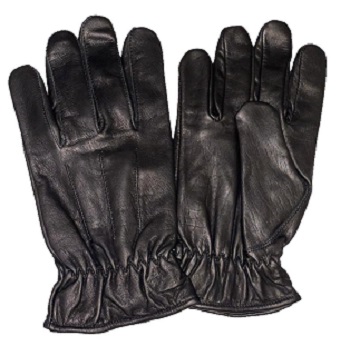
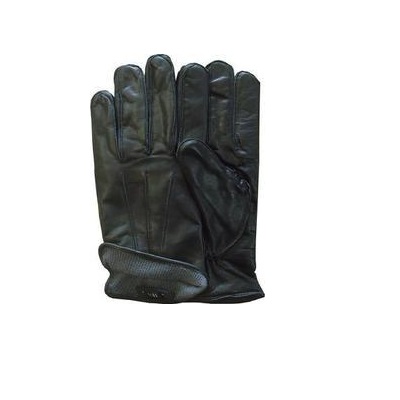
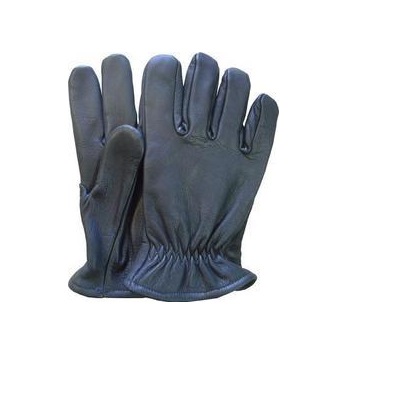
D.M.3000C
EN 388:2016+A1:2018 · 4443DX
Cut-resistant leather slash glove: full grain napa cowhide over a 650 denier Spectra® liner, form fitted for dexterity, with three rows of silking on the back of the hand.
Why there are two cut scores
The coup test (position 2) is the older method. A circular blade runs back and forth over the sample under a fixed load, and the result is an index compared with a reference fabric. It works well on leather and ordinary yarns, but very hard fibres can dull the blade partway through, and a dull blade makes the glove look better than it is.
The 2016 revision added the ISO 13997 (TDM) test in position 5. It draws a straight blade across the sample under increasing force and records the force needed to cut through. If the coup blade dulls during testing, the ISO 13997 letter becomes the reference cut result and the coup figure is only indicative. On these gloves you'll often see an X in position 2.
When comparing two gloves on cut, compare the letters (position 5) whenever both have one. The letter test is the same for every material.
EN 388 vs ANSI/ISEA 105
North American gloves usually also carry an ANSI/ISEA 105-2016 cut level, A1 to A9. It also uses a TDM machine (under ASTM F2992), but reports the result in grams rather than newtons, with nine levels instead of six.
- Lower cut hazardA1
- A2
- A3
- Moderate cut hazardA4
- A5
- A6
- High cut hazardA7
- A8
- A9
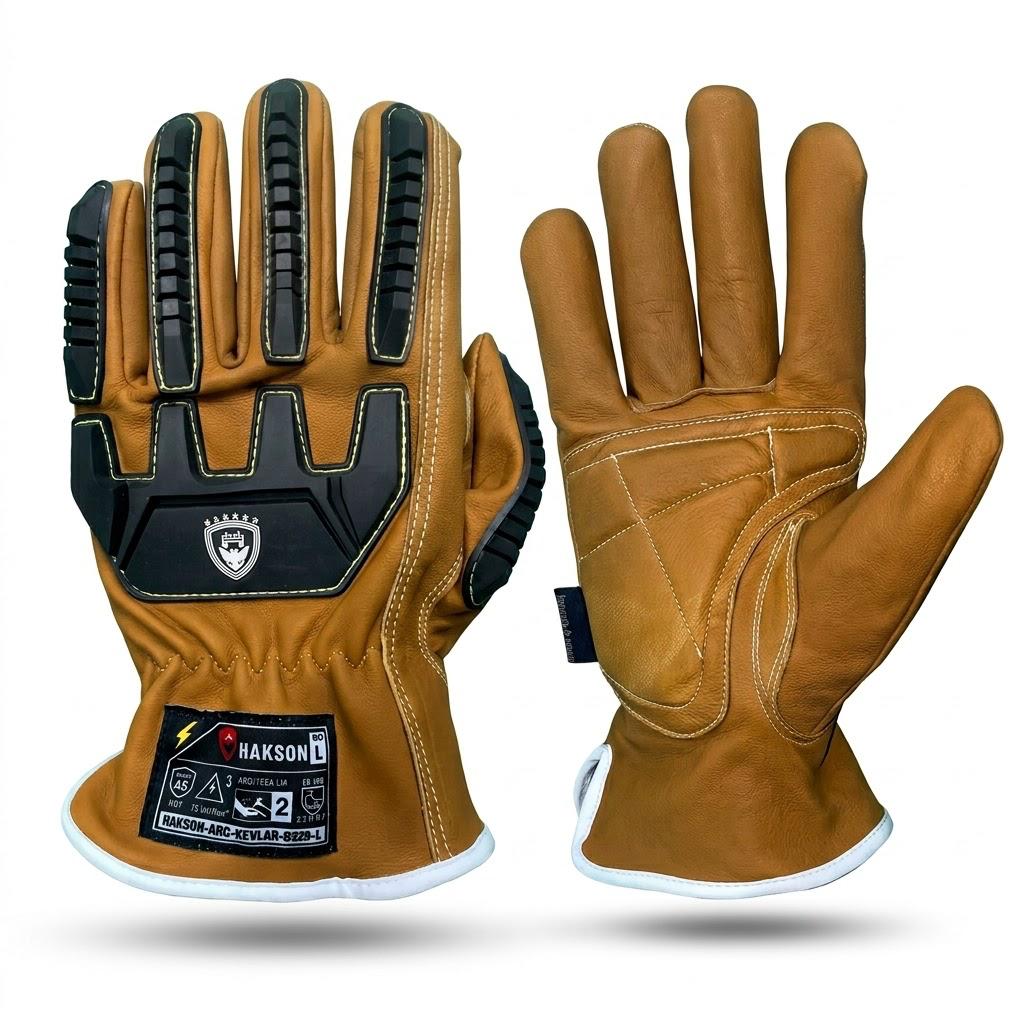
A5 · ARC-KEVLAR 8329
View as table
| Level | Grams to cut | Hazard band |
|---|---|---|
| A1 | 200 – 499 g | Lower |
| A2 | 500 – 999 g | Lower |
| A3 | 1,000 – 1,499 g | Lower |
| A4 | 1,500 – 2,199 g | Moderate |
| A5 | 2,200 – 2,999 g | Moderate |
| A6 | 3,000 – 3,999 g | Moderate |
| A7 | 4,000 – 4,999 g | High |
| A8 | 5,000 – 5,999 g | High |
| A9 | 6,000+ g | High |
Hazard bands are a common industry grouping, not part of the standard. Your risk assessment sets the level you need.
| ANSI level | Grams to cut |
|---|---|
| A1 | 200 – 499 g |
| A2 | 500 – 999 g |
| A3 | 1,000 – 1,499 g |
| A4 | 1,500 – 2,199 g |
| A5 | 2,200 – 2,999 g |
| A6 | 3,000 – 3,999 g |
| A7 | 4,000 – 4,999 g |
| A8 | 5,000 – 5,999 g |
| A9 | 6,000 g and up |
| EN ISO 13997 | Newtons to cut |
|---|---|
| A | 2 N |
| B | 5 N |
| C | 10 N |
| D | 15 N |
| E | 22 N |
| F | 30 N |
The scales overlap, but they don't convert one-to-one, and a glove needs a separate test for each. The ARC-KEVLAR 8329 is a real example: it's rated ANSI A5 and EN ISO 13997 D, from separate tests. If a tender asks for one standard, ask for that standard's test report, not a conversion.
Puncture is not needle resistance
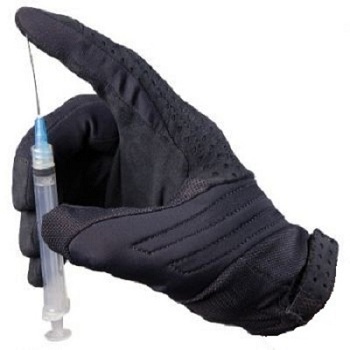
EN 388's puncture test uses a relatively blunt steel stylus. It tells you how well a glove resists things like wire ends, splinters and broken edges. It says nothing about hypodermic needles, which are far finer and slide between fibres.
Using the code to choose a glove
- Start from the hazard, not the highest number. More cut protection usually means a thicker or stiffer glove, and a glove that's too stiff to search or handcuff in gets taken off.
- Read cut from the letter (position 5) when there is one, especially if position 2 is X.
- Check the impact letter if knuckle protection matters. No P means no tested impact protection.
- Treat X as unknown, not as a pass.
- Ask for the test report for any rating that a purchase decision depends on.
For typical ratings by job (searches, corrections, rescue, arc flash), see our glove selection chart. Not sure which rating your team needs? Ask us. We'll send spec sheets and test reports for the gloves you're comparing.