Genuine leather is animal hide. Faux leather (also called PU leather, vinyl, leatherette or, in South Asia, rexine) is a plastic coating on a fabric backing, embossed to look like hide. The quickest tells are the cut edge and the back: real leather is fibrous all the way through, faux leather shows a thin plastic skin on woven or knitted cloth.
The fastest checks
- Look at a cut edge. Leather shows dense, fuzzy fibres. Faux leather shows layers: a plastic film over fabric.
- Look at the back. Leather's back is suede-like. Faux leather's back is a woven or knitted fabric. On a lined glove, check inside the cuff seam.
- Compare two spots. Real grain varies across the hide. If the pattern repeats exactly, it was pressed on by a roller.
Seven ways to tell them apart
| Test | Genuine leather | Faux leather (PU, PVC, rexine) | Watch out for |
|---|---|---|---|
| Grain | Irregular pores, creases and small marks that differ across the piece | Even, repeating pattern; pores spaced like a grid | Corrected-grain leather also has an embossed pattern |
| Cut edge | Fibrous, slightly rough, one material all the way through | Plastic film on a fabric core; may fray or peel | Edges are often painted: look at a seam allowance |
| Back side | Suede-like flesh side | Woven or knitted cloth | Linings hide the back: check at the cuff |
| Water drop | Absorbs slowly and darkens a little within a minute | Beads up and stays on top | Water-repellent leather also beads (see below) |
| Press and fold | Fine wrinkles radiate around your finger; creases stay soft | Dimples evenly and springs back; may crack along a fold | Very stiff leathers wrinkle less |
| Touch | Warms to your hand; slightly uneven feel | Stays cool and uniformly smooth or slick | Heavily finished leather feels smoother |
| Smell | Rich, natural, slightly earthy | Plastic or chemical | Finishes and new-product smells can mask both |
What faux leather is made of
Faux leather is a coated fabric. A base cloth (polyester, cotton or a knit) is coated with a plastic, then embossed with a grain pattern and finished. The common types:
| Type | Coating | Typical traits |
|---|---|---|
| PVC leather (vinyl) | Polyvinyl chloride | Hard-wearing and wipe-clean, but stiffens in the cold and can crack |
| PU leather | Polyurethane | Softer and more breathable than PVC; the coating can peel or flake as it ages |
| Microfibre synthetic | Polyurethane on a microfibre base | The most leather-like feel; common as synthetic suede on tactical glove palms |
| "Vegan leather" | A marketing term | Usually PU; some versions use plant fibres, often still with a plastic coating |
| Bonded leather | Leather scraps and a binder, often with a PU surface | Contains some leather but behaves like a coated material |
Synthetic palms aren't automatically worse. Microfibre palms on tactical gloves wash well and stay soft after soaking. The point is to know which one you're buying, and to pay leather prices only for leather.
What rexine is
Rexine is artificial leather. It began as a British brand name for leathercloth (fabric coated to look like leather) used in bookbinding, furniture and car seats. In Pakistan, India and other parts of South Asia the word is still used for any faux leather, the way "Kleenex" is used for tissues.
So "rexine gloves" or "rexine seats" means coated fabric, not hide. Every test in the table above applies.
Why "genuine leather" can mean low grade
"Genuine leather" sounds like a guarantee, but on many labels it's a grade. It often means split leather: the lower layer of the hide, coated and embossed to look like the surface. It is real leather, but weaker and less breathable than full grain.
For gloves, look for full grain (the whole outer layer, intact) or a named type such as full grain napa cowhide. Our nappa leather guide explains the grades in detail.
Why it matters in a duty glove
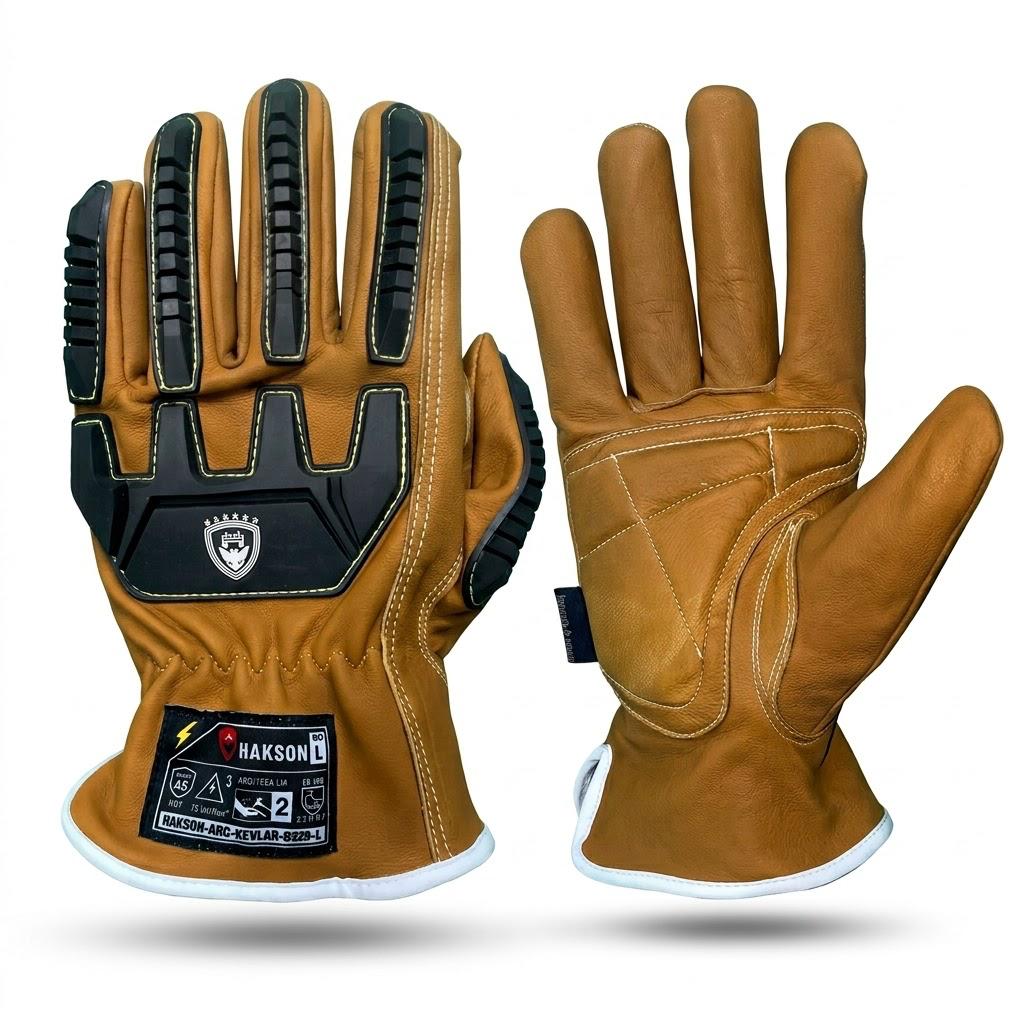
- Abrasion and tear. The grain layer is what scores well on EN 388 abrasion and tear. The DM3000C, with a 0.6–0.8 mm full grain napa cowhide shell, rates 4 for both in EN 388, the top level.
- Cold. PVC stiffens in a Canadian winter and can crack along folds. Leather stays workable.
- Heat. Plastic coatings soften and can melt. Leather chars rather than melting, which is why flame-resistant gloves use treated leather shells.
- Fit over time. Leather breathes and moulds to the hand. Coated fabric doesn't.
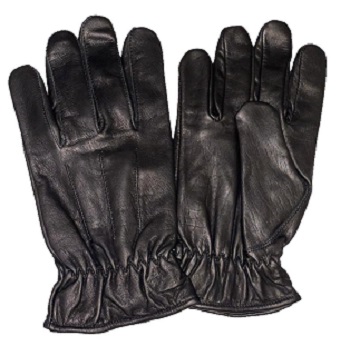
D.M.3000C
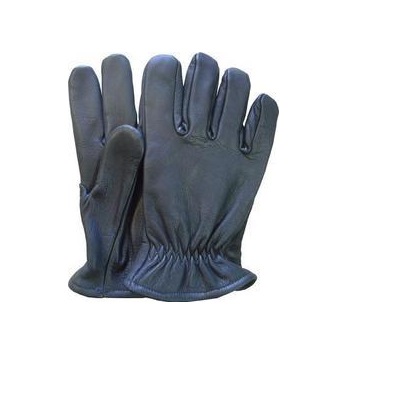
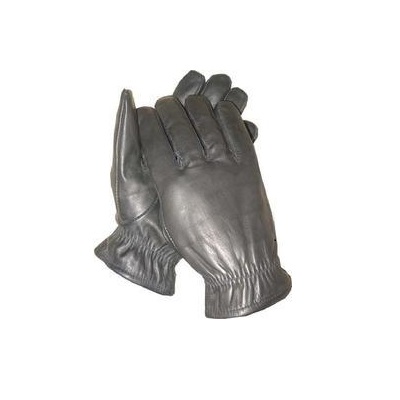
Full grain napa cowhide · EN 388 4443DX
Drum-dyed, chrome-tanned full grain napa cowhide, 0.6–0.8 mm, over a 650 denier Spectra® liner. The leather is free of PCP and AZO dyes, per the spec sheet.