A cut-resistant glove is only as good as the fibre between the blade and your hand. Spec sheets name the fibre (Spectra®, Kevlar®, Dyneema®) and often a yarn weight like "650 denier". This guide explains what those words mean, how the fibres differ, and how to pick between them.
How cut resistance works
A blade cuts by concentrating force on a very narrow edge and parting fibres one at a time. High-performance fibres resist that in different ways. They're very strong for their weight, so each fibre takes more force to sever. Some are slick, so the edge skids instead of biting. And they can be packed densely into a yarn and knit, so the blade meets a lot of fibre in a short distance.
Three things set the result: the fibre (what it's made of), the yarn weight (how much of it there is, which is where denier comes in), and the construction (knit density, layers, and what's over it).
How it's measured
Two standards cover cut resistance on gloves sold in Canada. ANSI/ISEA 105-2016 rates A1–A9 by the grams of force needed to cut through. EN 388:2016+A1:2018 gives a coup cut level (1–5) and an ISO 13997 letter (A–F) in newtons.
- Lower cut hazardA1
- A2
- A3
- Moderate cut hazardA4
- A5
- A6
- High cut hazardA7
- A8
- A9
A5 · ARC-KEVLAR 8329 (Kevlar®)
View as table
| Level | Grams to cut | Hazard band |
|---|---|---|
| A1 | 200 – 499 g | Lower |
| A2 | 500 – 999 g | Lower |
| A3 | 1,000 – 1,499 g | Lower |
| A4 | 1,500 – 2,199 g | Moderate |
| A5 | 2,200 – 2,999 g | Moderate |
| A6 | 3,000 – 3,999 g | Moderate |
| A7 | 4,000 – 4,999 g | High |
| A8 | 5,000 – 5,999 g | High |
| A9 | 6,000+ g | High |
Hazard bands are a common industry grouping, not part of the standard. Your risk assessment sets the level you need.
The two don't convert directly. Our EN 388 guide covers how to read the full code and why.
Honeywell Spectra®
Spectra® is Honeywell's ultra-high-molecular-weight polyethylene (UHMWPE) fibre, produced in the United States. Chemically it's the same family as the polyethylene in milk jugs, but made of extremely long molecular chains drawn out and aligned along the fibre. That alignment is what makes it so strong.
- Strength for its weight. Honeywell describes Spectra as pound-for-pound 15 times stronger than steel, with about 40% greater specific strength than aramid fibre.
- Light. Its specific gravity is about 0.97. It floats, and a liner adds little weight or bulk.
- Slick and cool to the touch. The smooth surface helps blades skid, and it doesn't hold heat against the hand.
- Shrugs off moisture. It absorbs essentially no water and resists many chemicals, so it keeps its properties wet.
Why it matters in a duty glove: you get high cut resistance from a thin, flexible liner, so it can sit under a fitted leather shell without killing dexterity. That's the combination search and patrol work needs: feel through the fingertips with a cut layer underneath.
Dyneema®, which you'll see on other brands, is a competing UHMWPE fibre from the same family, with similar strengths and the same heat limit.
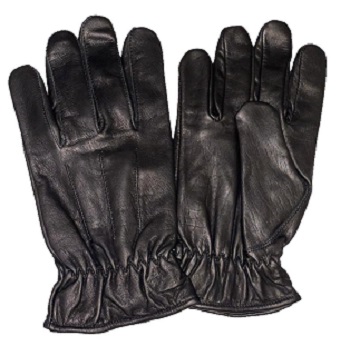
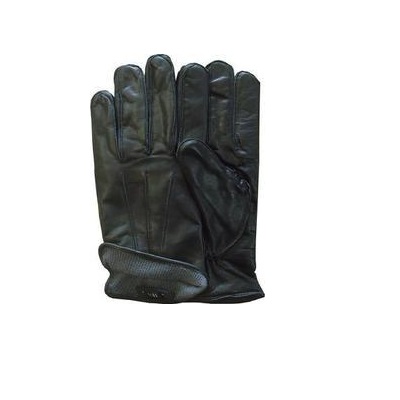
D.M.3000C
100% Spectra® liner, 650 denier · EN 388 4443DX
A seamless 650 denier Spectra® knit liner, tacked at all five fingertips, under full grain napa cowhide. It scores 4 for coup cut and D on the ISO 13997 cut test.
DuPont™ Kevlar®
Kevlar® is DuPont's para-aramid fibre. Chemist Stephanie Kwolek discovered it at DuPont in 1965, and it went into commercial use in the early 1970s. It's the fibre most people associate with body armour.
- Strength for its weight. DuPont describes Kevlar as five times stronger than steel on an equal-weight basis.
- Doesn't melt. Aramid is inherently flame resistant. Instead of melting and dripping, it chars, and only starts to decompose at around 400–450 °C (750–840 °F).
- Strong thread as well as fabric. Kevlar thread keeps seams together under heat that would melt nylon or polyester stitching.
Weak spots: Kevlar is degraded by prolonged UV light and by chlorine bleach, and it absorbs a little moisture. It's also less slick than polyethylene, so for the same weight it generally gives up some cut performance to Spectra. You choose it when heat is part of the job.
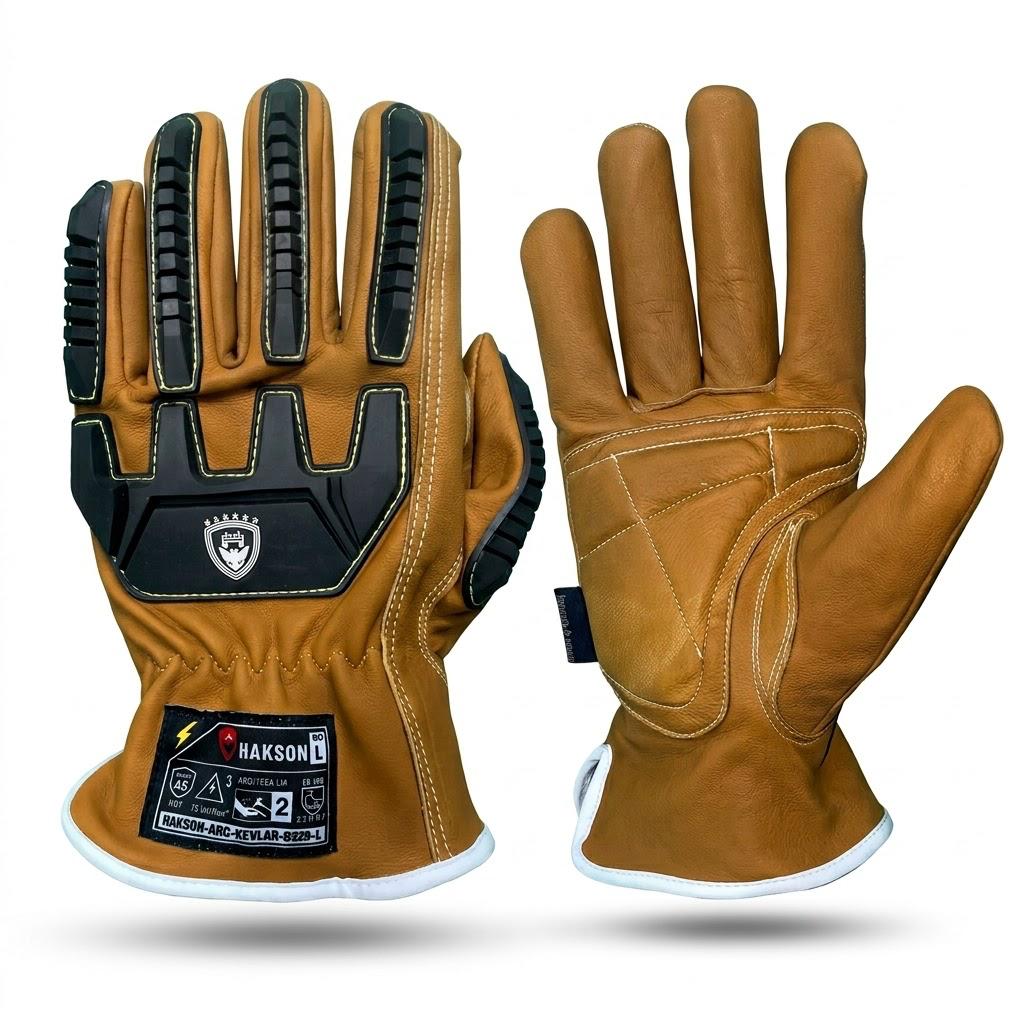
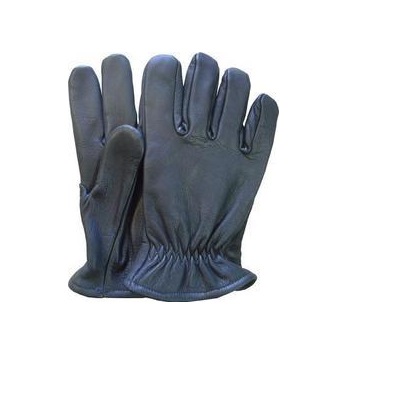
HAKSON-ARC-KEVLAR-8329
Kevlar® lining & thread · ANSI A5 · EN 388 3X33DP · 35 cal/cm²
A DuPont™ Kevlar® cloth lining under a flame-resistant goatskin shell, with impact moulds sewn on in Kevlar® thread. It's rated ANSI A5 cut and arc rated at 35 cal/cm². Because Kevlar doesn't melt, the cut layer and seams hold up under thermal load.
Spectra vs Kevlar side by side
| Spectra® (UHMWPE) | Kevlar® (para-aramid) | |
|---|---|---|
| Made by | Honeywell | DuPont |
| Maker's strength claim | 15× steel, pound for pound | 5× steel, weight for weight |
| Weight | Very light, floats (SG ≈ 0.97) | Heavier than water |
| Heat | Melts at roughly 130–150 °C | Doesn't melt; decomposes at around 400–450 °C |
| Flame resistance | No | Yes, inherently |
| Moisture | Absorbs essentially none | Absorbs a little |
| Feel | Slick, cool | Drier, warmer |
| Watch out for | Heat, flame, hot dryers | UV, chlorine bleach |
| Best for | Searching, patrol, corrections, cold or wet work | Fire, arc flash, rescue, hot work |
What 650 denier means
Denier is a measure of yarn weight: the mass in grams of 9,000 metres of the yarn. A 650 denier yarn weighs 650 g per 9,000 m. The unit comes from silk, where a single strand is about 1 denier. Higher denier means a thicker yarn with more fibre in it.
- More fibre, more for the blade to get through. With the same fibre and knit, a heavier yarn generally gives more cut and abrasion resistance.
- The cost is bulk. Heavier yarn makes a thicker, warmer, stiffer liner, which is why denier is always a balance against dexterity.
- Denier says nothing about the fibre. A 650 denier polyester yarn isn't cut resistant at all. "650 denier" only means something next to the fibre name: 650 denier Spectra®.
What the leather shell adds
In a leather duty glove the fibre liner handles the cutting, and the leather handles everything else: abrasion, tear, grip and some puncture resistance. On the DM3000C's 4443DX rating, the top-level abrasion (4) and tear (4) scores come largely from its 0.6–0.8 mm full grain napa cowhide shell. The ARC-KEVLAR 8329 uses a 0.8–0.9 mm goatskin shell, treated to repel water and oil and resist flame.
Which material for which job
The short version is below. For the full breakdown by task, with the ratings to ask for, see the glove selection chart.
| Job | Look for | Example |
|---|---|---|
| Patrol, searching, corrections | Spectra® or Dyneema® liner under fitted leather; check the ISO cut letter | DM3000C |
| Fire, arc flash, rescue, extrication | Kevlar® lining and Kevlar® thread; an arc rating if electrical | ARC-KEVLAR 8329 |
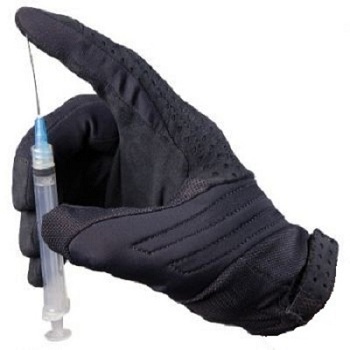
| Searches where needles are a risk | An ASTM F2878 needle-puncture result, not just EN 388 puncture | Protective gloves |
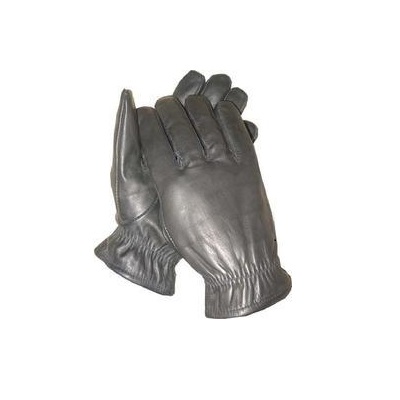
| Flight and FR duty | Inherently flame-resistant fibres such as Nomex® | Flame-resistant gloves |
Care: keep the rating you paid for
- Spectra-lined leather (DM3000C): wipe with isopropyl alcohol for routine cleaning, or hand wash in warm water with mild soap and hang to dry. No oils, wax, polish or silicone protectors. Don't store wet, and avoid prolonged sunlight. Never dry on a heater.
- Kevlar-lined (ARC-KEVLAR 8329): brush or wipe clean and air dry away from heat. No machine washing, dry cleaning, bleach, ironing or tumble drying.
- Retire any glove that's cut through, scorched, or soaked in fuel or solvent. The rating no longer applies.
FAQ
Is Spectra better than Kevlar?+
What does 650 denier mean on a glove liner?+
Are cut-resistant gloves cut proof?+
Can Spectra gloves be used near heat?+
Is Dyneema the same as Spectra?+
Spectra® and Dyneema® are registered trademarks of their respective owners. DuPont™ and Kevlar® are trademarks or registered trademarks of DuPont de Nemours, Inc. Nomex® is a registered trademark of DuPont. Maker strength claims are as published by the fibre manufacturers.